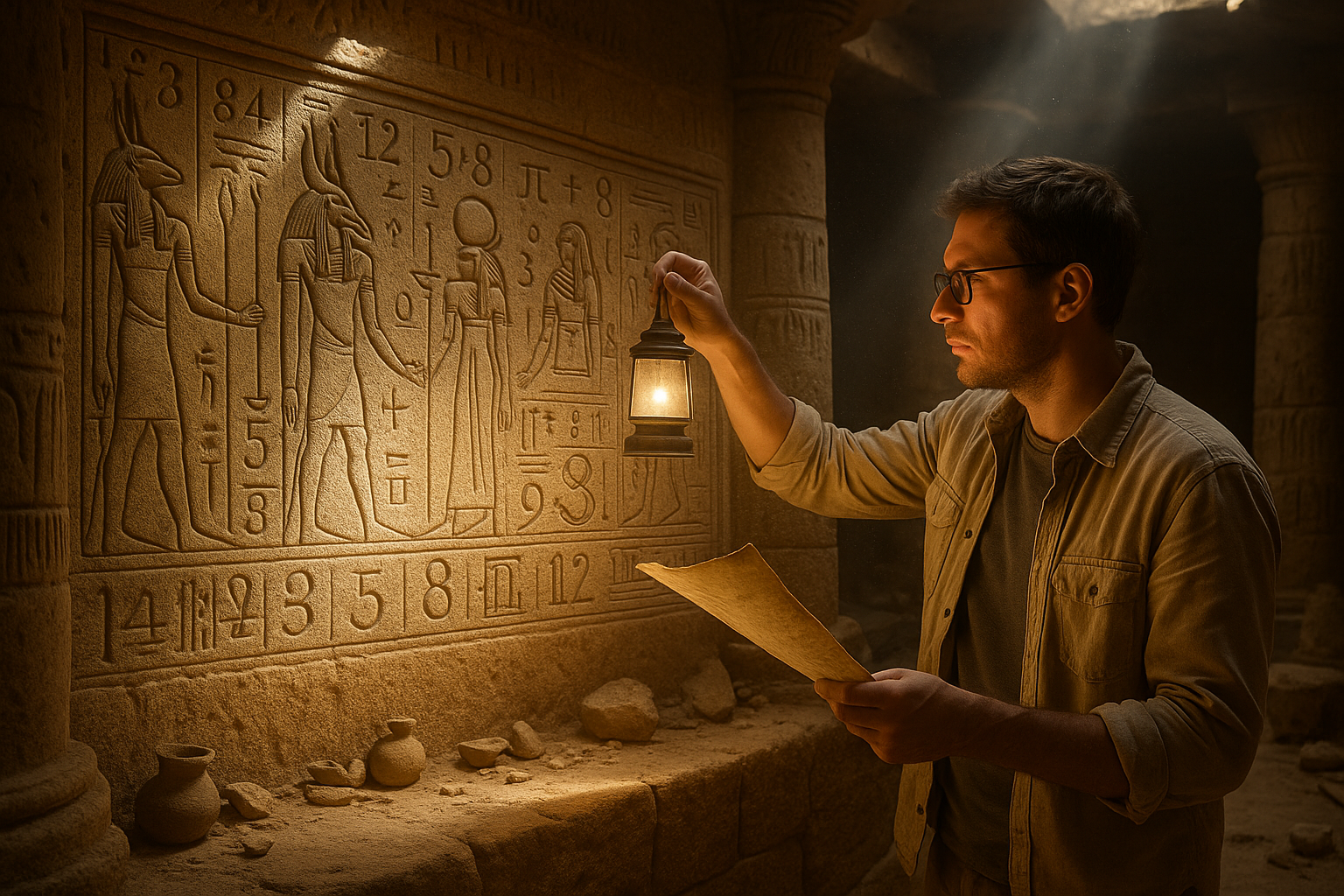
In the heart of ancient civilizations, where stone met sky and the sacred intertwined with the mundane, there exists a profound mystery that continues to captivate architects, historians, and mathematicians alike. This enigma, known as the Golden Ratio, is a mathematical proportion that has been celebrated for its aesthetic beauty and harmonious properties. But what if this ratio was not just a mathematical abstraction, but a guiding principle that ancient builders harnessed to achieve architectural perfection in their temples? 🌟

The allure of the Golden Ratio, approximately 1.618, lies in its ability to create balance and beauty, a quality that transcends time and culture. From the Parthenon in Greece to the temples of Angkor Wat in Cambodia, evidence suggests that this ratio was meticulously employed to craft structures that were not only functional but also spiritually resonant. But how did these ancient architects, devoid of modern tools, manage to incorporate such complex mathematics into their designs? What drove them to pursue such precision? And what can we learn from their achievements today? These are the questions we will explore as we delve into the architectural wonders of the past.
The first step on this journey takes us back to the origins of the Golden Ratio and its mathematical significance. We’ll examine how this seemingly simple number captivated some of the greatest minds in history, from Euclid to Leonardo da Vinci, and how it became synonymous with beauty and harmony. Understanding its mathematical foundation will allow us to appreciate why ancient cultures revered it as a divine proportion, one that mirrored the natural order of the universe.
Next, we’ll travel across continents and centuries to explore specific examples of ancient temples where the Golden Ratio’s influence is unmistakable. In Greece, the Parthenon stands as a testament to the Greeks’ pursuit of symmetry and proportion, embodying the ideals of their philosophical and mathematical advancements. Moving eastward, we’ll uncover the hidden ratios within the intricate carvings and grandiose architecture of Hindu temples in India, where spirituality and mathematics converge in a celebration of the cosmos.
As we peel back the layers of history, we’ll discover the role of the Golden Ratio in the majestic designs of the Egyptian pyramids and the awe-inspiring construction of Mayan temples. These structures, often aligned with celestial events, reveal an advanced understanding of both earthly and cosmic scales, suggesting that ancient architects perceived a deep connection between their creations and the universe itself. 🌌
Throughout this exploration, we’ll also address the skepticism that surrounds the use of the Golden Ratio in ancient architecture. While some scholars argue that the ratio’s presence is more coincidence than intentional design, others believe in its deliberate application. By examining historical texts, architectural blueprints, and recent archaeological findings, we’ll weigh these perspectives and consider how the Golden Ratio might have been communicated and taught in ancient times.
Finally, we’ll reflect on the implications of these ancient practices for contemporary architecture. In an age where technology and innovation often overshadow simplicity and elegance, what lessons can modern architects learn from these historical masterpieces? We’ll explore how the principles of the Golden Ratio continue to influence modern design, from urban planning to digital interfaces, proving that this ancient secret still holds relevance in our quest for beauty and functionality. 🏛️
Join us as we unlock the mysteries of the Golden Ratio, weaving through the past to illuminate the present. This journey promises to not only deepen our understanding of architectural history but also inspire us to see the world through the lens of harmony and proportion, much like the visionary architects of ancient temples.
Conclusion
## Conclusion
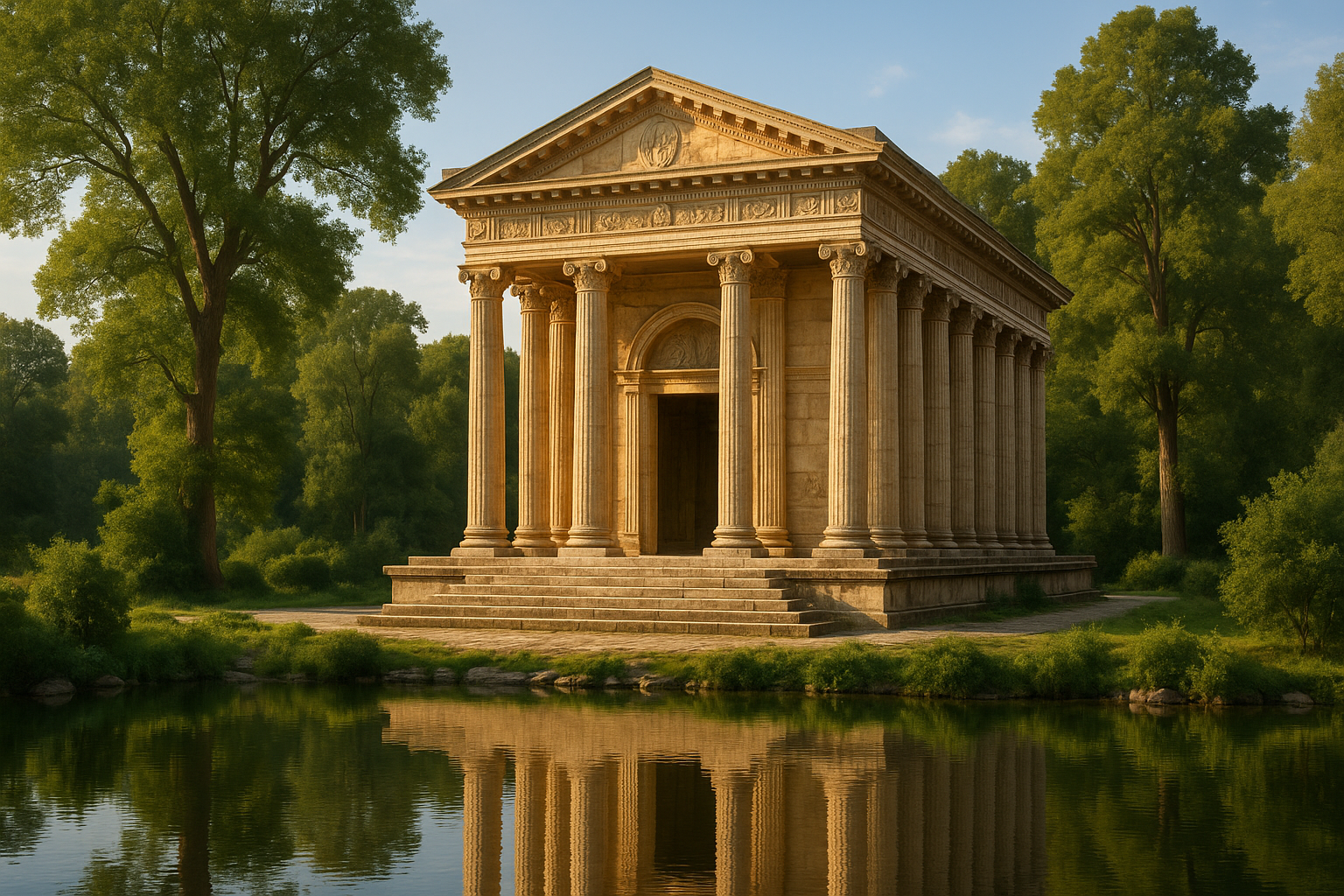
The golden ratio’s presence in ancient temples across civilizations isn’t merely coincidental—it represents humanity’s deep-rooted quest to capture divine harmony in physical form. From the Parthenon’s precise proportions to the Great Pyramid’s geometric perfection, these sacred structures reveal that our ancestors possessed a sophisticated understanding of mathematics, aesthetics, and their profound connection. Whether these builders consciously applied phi or intuitively grasped its pleasing proportions, they created monuments that continue to captivate us thousands of years later. This mathematical constant served as an invisible thread connecting cultures separated by vast distances and time, suggesting a universal human appreciation for balance and beauty.
What makes these discoveries even more remarkable is how modern science continues to validate what ancient architects somehow knew. Contemporary studies using advanced measurement tools and computer analysis have confirmed the golden ratio’s prevalence in temples we once thought were built purely by trial and error. This bridge between ancient wisdom and modern technology reminds us that innovation doesn’t always mean moving forward—sometimes it means rediscovering timeless principles that were always there. The temples themselves stand as testament to knowledge systems that valued observation, proportion, and the natural world’s inherent patterns.
As you stand before these ancient wonders or study their blueprints, remember that you’re witnessing more than impressive stonework. You’re experiencing humanity’s earliest attempts to translate the language of the universe into architecture, to make the invisible golden spiral visible in stone and space. These temple secrets aren’t really secrets at all—they’re an open invitation to see the world through the eyes of those who built with reverence, precision, and an unwavering belief that beauty and mathematics are two expressions of the same eternal truth.